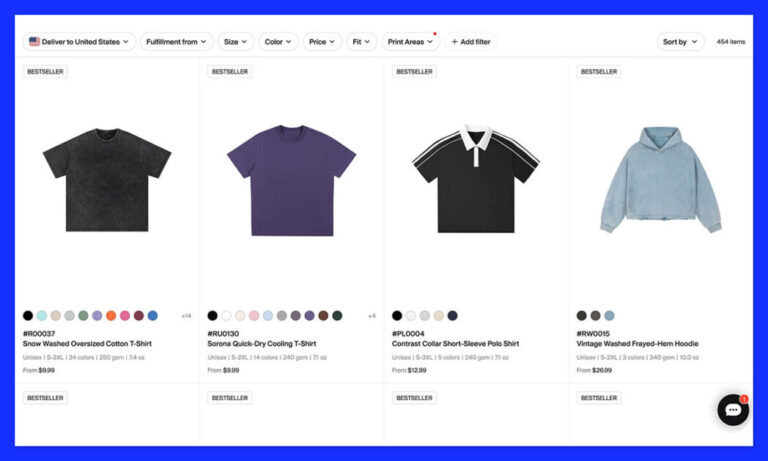
Shopify and Depop both help you sell fashion online, but they are not really competing for the same job.
Shopify is a full commerce platform for building and scaling your own branded store, while Depop is a peer-to-peer marketplace built around fashion resale, discovery, and social selling.
So the honest question is not “which one is better,” but “which business model is each one built to win.” I’ve compared both on running costs, selling features, audience reach, marketing, ease of starting, and long-term growth to help you decide.
Shopify vs Depop: Quick Verdict
- Shopify – Best for building and scaling your own brand (get your first 3 months for $1/month)
- Depop – Best for fast, low-cost fashion resale with a built-in audience
In this comparison, I’ll break down where each platform pulls ahead, looking at fees, sales features, audience, marketing, usability, and how each one handles growth, so you can match the platform to the kind of business you actually want to run.
Quick Comparison: Shopify vs Depop
Here is a side-by-side overview of how the two platforms stack up:
| Feature | Shopify | Depop |
|---|---|---|
| Best for | Owning and scaling a branded store | Social fashion resale and discovery |
| Business model | Hosted online store builder | Peer-to-peer marketplace |
| Starting cost | From $29/month (billed annually) | No monthly fee |
| Selling/processing fees | 2.9% + 30¢ per online card sale on Basic | 0% selling fee in US/UK, plus payment processing |
| Built-in audience | None, you bring your own traffic | Around 43.5 million registered users |
| Brand control | Full control of design, checkout, and data | Limited, you sell inside Depop’s app |
| Ease of starting | Guided setup, more steps | List from your phone in minutes |
| Product range | Any category, physical or digital | Fashion-first (vintage, streetwear, thrift) |
Key Takeaways
- Shopify is the long-term platform. If you want a real brand asset with full control over pricing, design, email, and customer data, Shopify wins, but you have to drive your own traffic.
- Depop is the faster, cheaper starting point. Its built-in marketplace audience and near-zero seller fees make it ideal for testing demand and moving secondhand or unique fashion quickly.
- They work well together. Many sellers start on Depop to build an audience and then graduate to Shopify once they want to own their brand and customer relationships.
Best for Fees and Running Costs: Depop
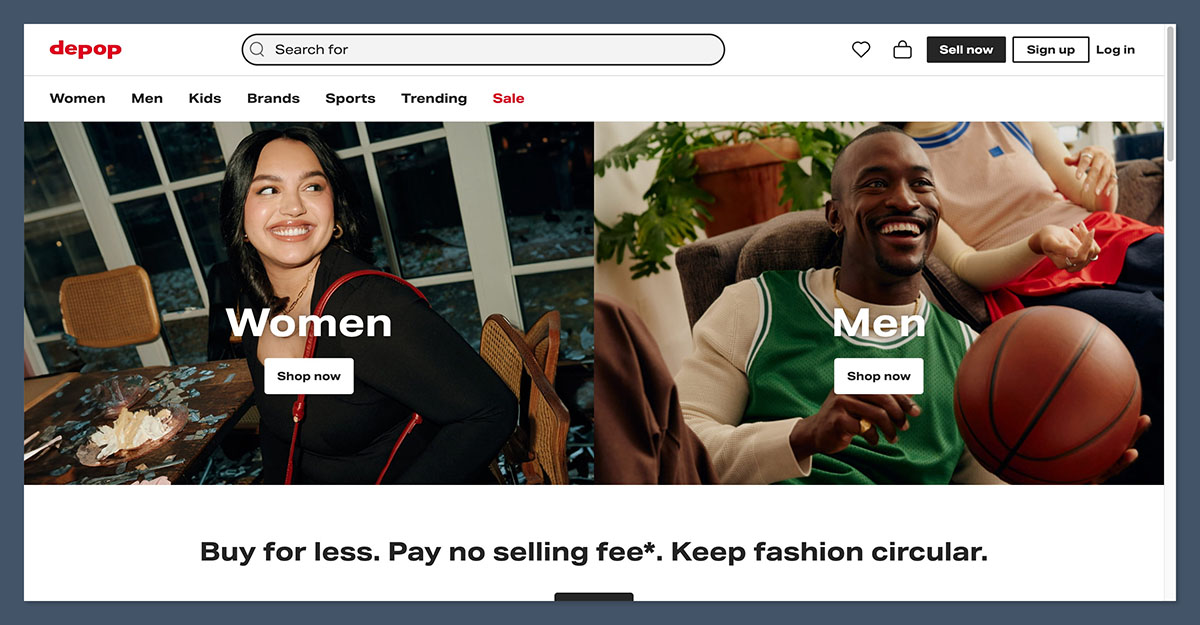
The cost structures here are completely different, so the right answer depends on your sales volume.
Shopify charges a fixed monthly subscription regardless of whether you sell anything. Its three core plans range from $29 to $299 per month (billed annually), and there are payment processing fees on top:
- Basic – $29/month annually ($39 billed monthly), 2.9% + 30¢ per online card transaction; a full store with unlimited products, abandoned cart recovery, and up to 2 staff accounts
- Grow – $79/month annually ($105 billed monthly), with lower card rates; adds standard reports, advanced inventory tools, and up to 5 staff accounts for growing teams
- Advanced – $299/month annually ($399 billed monthly), with the lowest card rates; adds custom reporting, lower real-time shipping rates, and up to 15 staff accounts for scaling stores
Shopify also offers a $5/month Starter plan for selling through social and messaging, a 3-day free trial, and an introductory deal that gives you your first three months for $1/month. If you use a third-party gateway instead of Shopify Payments, expect an extra surcharge of roughly 0.2% to 2% on top.
Depop flips the model entirely. There is no monthly subscription and, for sellers in the US and UK, no selling commission on new listings. You only pay payment processing:
- US sellers – 3.3% + $0.45 per transaction, 0% selling fee
- UK sellers – 2.9% + £0.30 per transaction, 0% selling fee
- Sellers outside the US and UK – a 10% selling fee still applies, plus processing
Boosting a listing is optional and costs around 8%, charged only when a boosted item actually sells, so it behaves more like ad spend than a flat fee. Processing fees apply to the full transaction (item price plus buyer-paid shipping).
For a low-volume reseller, that near-zero overhead is hard to beat: there is simply no monthly bill eating into thin margins. For a high-volume store doing thousands of orders a month, Shopify’s fixed subscription often works out cheaper per sale once you spread it across volume.
The Winner
Depop wins for low-volume and starting out. With no monthly fee and 0% seller commission in the US and UK, it is the cheapest way to begin selling fashion. Shopify becomes the better value once your order volume is high enough to absorb the subscription.
Best for Selling Features and Control: Shopify

This is where the two platforms separate most clearly. Shopify is a complete commerce stack, while Depop is a streamlined listing app.
With Shopify, you get hosting, a customizable checkout, inventory management across multiple locations, detailed analytics, abandoned cart recovery, discount engines, and multichannel selling across online, in-person, and marketplaces. You can extend it with thousands of third-party apps and sell physical products, digital goods, subscriptions, or services.
Crucially, you control the entire experience, from the product page to the checkout to the post-purchase emails.
Depop is deliberately simpler. You photograph an item, write a short description, set a price, and list it inside the app. There is no custom checkout, no deep analytics suite, and no real merchandising control beyond your shop’s grid. That simplicity is a feature for casual sellers, but it is a hard ceiling for anyone who wants to build a structured catalog, run sophisticated promotions, or sell outside fashion.
The Winner
Shopify wins comfortably on features and control. It gives you a full commerce toolkit and ownership of the entire customer journey, while Depop keeps things light and limits you to selling inside its app.
Best for Reaching Buyers: Depop
A store with no visitors makes no sales, and this is the single biggest difference between the two platforms.
Depop comes with a built-in audience of roughly 43.5 million registered users who are already there to browse and buy fashion. Its feed, search, and social layer surface your items to people actively hunting for vintage, streetwear, and secondhand pieces.
You can make sales on day one without spending a cent on marketing, simply because the demand is already inside the app.
Shopify gives you a storefront but no audience. Every visitor has to be earned through SEO, paid ads, email, creators, social media, or marketplace distribution. That is the trade-off for owning your brand: total control, but you are responsible for driving every click. For a new seller with no following, that can be a slow and expensive climb.
The Winner
Depop wins on built-in demand. Its marketplace puts your listings in front of millions of fashion buyers immediately, whereas with Shopify you have to build and pay for your own traffic.
Best for Marketing and Owning Your Customer: Shopify
Reaching buyers is one thing; turning them into a repeat audience you actually own is another.
Shopify is built for this. You can capture email addresses, run campaigns with Shopify Email, sync products to Instagram, TikTok, Amazon, and Etsy, optimize for search with strong built-in SEO controls, and retarget shoppers who abandon their carts.
Every customer relationship belongs to you, which means you can market to them again and again without paying a platform for access.
On Depop, the relationship belongs to Depop. You can build a following inside the app and use its social features, but you cannot export your buyers into an email list or move them to your own channels. When a sale ends, the customer is the marketplace’s, not yours. That makes it excellent for discovery but weak for building durable, owned demand.
The Winner
Shopify wins on marketing and customer ownership. It gives you email, SEO, omnichannel selling, and a customer list you control, while Depop keeps the customer relationship inside its own ecosystem.
Easiest to Get Started: Depop
For sheer speed from sign-up to first listing, Depop is the clear winner.
Setting up on Depop takes minutes. You download the app, create a profile, snap a few photos, and your first item is live to the whole marketplace. There is no store to design, no theme to choose, and no checkout to configure. It is built for people who want to list and sell from their phone with zero technical setup.
Shopify’s onboarding is more involved by design.
You answer a few questions about your business, then work through a setup checklist that covers adding products, choosing a theme, configuring payments, and connecting a domain. It is well guided and not difficult, but it is a project rather than a five-minute task, because you are building a standalone store rather than posting to an existing one.
The Winner
Depop wins for speed and simplicity. You can be listed and selling within minutes, while Shopify asks you to build out a full store before you launch.
Best for Scaling a Brand: Shopify
Where a business goes after the first hundred sales is where Shopify pulls decisively ahead.
Shopify is engineered to grow with you. As volume rises you can move up plans for lower card rates, add staff accounts, expand into international markets with multi-currency and translated storefronts, automate workflows, integrate ERP and fulfillment tools, and eventually move to Shopify Plus for enterprise needs.
Your brand, domain, and customer data stay with you the whole way.
Depop is not designed for that kind of scale. It is fantastic for moving inventory and building a fashion following, but you are always a tenant inside someone else’s marketplace, constrained by its categories, its fee model, and its rules. Sellers who outgrow Depop almost always need a real storefront to keep growing, which usually means migrating to a platform like Shopify.
The Winner
Shopify wins on scalability. It supports international expansion, automation, and enterprise tooling while letting you keep full ownership of your brand and data, where Depop’s marketplace model has a natural ceiling.
Who Should Use Shopify?
Shopify is a good fit if:
- You want to build a long-term brand with your own domain and identity
- You need full control over design, pricing, checkout, and customer data
- You plan to sell beyond fashion, or mix physical and digital products
- You expect meaningful volume and want lower per-sale fees as you grow
- You are ready to invest in your own marketing and SEO
Shopify is less suitable if:
- You are only selling a handful of secondhand items occasionally
- You have no audience and no budget to drive traffic
- You want to be live and selling within minutes with zero setup
Who Should Use Depop?
Depop is a good fit if:
- You sell vintage, streetwear, thrifted, or upcycled fashion
- You want immediate access to an engaged buyer audience
- You value low fees and no monthly commitment
- You want to list quickly from your phone and turn over stock fast
- Social discovery and community matter as much as direct conversion
Depop is less suitable if:
- You want to own your brand, storefront, and customer list
- You sell outside fashion or need a structured, large catalog
- You are building toward serious scale and omnichannel operations
How We Evaluate Selling Platforms
We assess ecommerce platforms and marketplaces using a consistent, reader-focused framework so our recommendations reflect what actually matters when you are choosing where to sell. For this comparison, I weighed each platform across the areas below:
| Criteria | What we assess |
|---|---|
| Selling features | Catalog tools, checkout, inventory, analytics, and extensibility |
| Costs and fees | Subscriptions, selling commissions, payment processing, and hidden costs |
| Audience and reach | Built-in demand versus the need to generate your own traffic |
| Marketing and ownership | SEO, email, multichannel selling, and control of the customer relationship |
| Ease of use | Setup speed, onboarding, and day-to-day management |
| Scalability | How well the platform supports growth, expansion, and higher volume |
Where possible, I draw on hands-on experience with both platforms and current, verified pricing and fee information, so the guidance reflects how each one works in practice rather than how it is marketed.
Shopify vs Depop: Our Verdict
There is no single winner here, because Shopify and Depop are built for different jobs. The right choice comes down to whether you want to rent attention inside a marketplace or own a storefront and audience directly.
If you are flipping secondhand fashion, testing demand, or want to start selling today with no monthly cost and an audience already in place, Depop is the better starting point. Its near-zero seller fees and built-in community make it one of the most accessible ways to sell fashion online.
If you are building a brand you intend to grow, want control over design, pricing, marketing, and customer data, and may eventually expand beyond fashion, Shopify is the stronger long-term platform. You take on the work of driving your own traffic, but you own everything you build.
For many sellers the smartest move is sequential: start on Depop to build momentum and an audience, then move to Shopify once you are ready to own your brand and scale it on your own terms.
Frequently Asked Questions
Is Depop cheaper than Shopify?
For low-volume sellers, yes. Depop has no monthly fee and charges 0% selling commission for US and UK sellers, so you only pay payment processing. Shopify charges a fixed monthly subscription, which only becomes cheaper per sale once you are selling at higher volumes.
Can I use Shopify and Depop at the same time?
Yes, and many sellers do. A common approach is to use Depop to reach the marketplace audience and move inventory while running a Shopify store as your owned brand hub. They serve different purposes, so using both can capture both marketplace demand and direct sales.
Does Depop work for selling new or non-fashion products?
Depop is built around fashion, especially vintage, streetwear, and secondhand items, and its audience expects that. You can list some adjacent items, but it is not designed for broad catalogs or non-fashion categories. For those, a store builder like Shopify is a better fit.
Do I own my customers on Depop?
No. On Depop, the customer relationship belongs to the marketplace. You cannot export buyers into your own email list or move them to other channels. With Shopify, you own your customer data and can market to your audience directly.
Which is better for building a long-term brand?
Shopify. It gives you your own domain, full design and checkout control, SEO and email tools, and ownership of your customer list, all of which are essential for building a durable, recognizable brand over time.