When I first started with print-on-demand, Printful was the obvious starting point. The platform had a polished look, a solid catalog, and an easy Shopify integration. But once I started digging into my margins and fulfillment times, I realized something important. Printful is good, but it’s not always the best option—especially if you want faster shipping, better product pricing, or more control over your brand.
So I started testing other platforms. I looked at what other eCommerce sellers were using, the tradeoffs they made, and how they scaled with different tools. If you’re in the same boat—maybe you like Printful but feel like something’s missing—this article is for you. These are the strongest alternatives sellers are switching to, what you actually get from each one, how the pricing works, and the pros and cons that matter.
Let’s break it down with a quick comparison first, then go deep into each option.
Quick Comparison of the Best Printful Alternatives
| Provider | Starting Price (USD) | Best For | What Stands Out |
|---|---|---|---|
| Printify | Free, Premium from $24.99/mo annual | Catalog size and supplier control | Choose from multiple providers per product |
| Gelato | Free, Gelato+ $19.99/mo annual | Global delivery | Local printing network in 30+ countries |
| Gooten | Free | Simplicity and pay-as-you-go | No subscriptions or hidden fees |
| SPOD | Free | Speed and simple setup | 48-hour production on 95% of orders |
| CustomCat | Free, Pro $30/mo or $25/mo annual | Higher margins, US focus | Deep discounts on apparel via Pro |
| Apliiq | Pay per order, VIP $39.99/mo | Fashion-focused branding | Woven labels, private label feel |
| teelaunch | Free | Etsy and simple gifts | Lightweight, gift-focused catalog |
| Printed Mint | Free | Boutique brands and packaging | Gift-ready presentation and curated products |
1. Printful: The Trusted Industry Standard for Quality and Ease
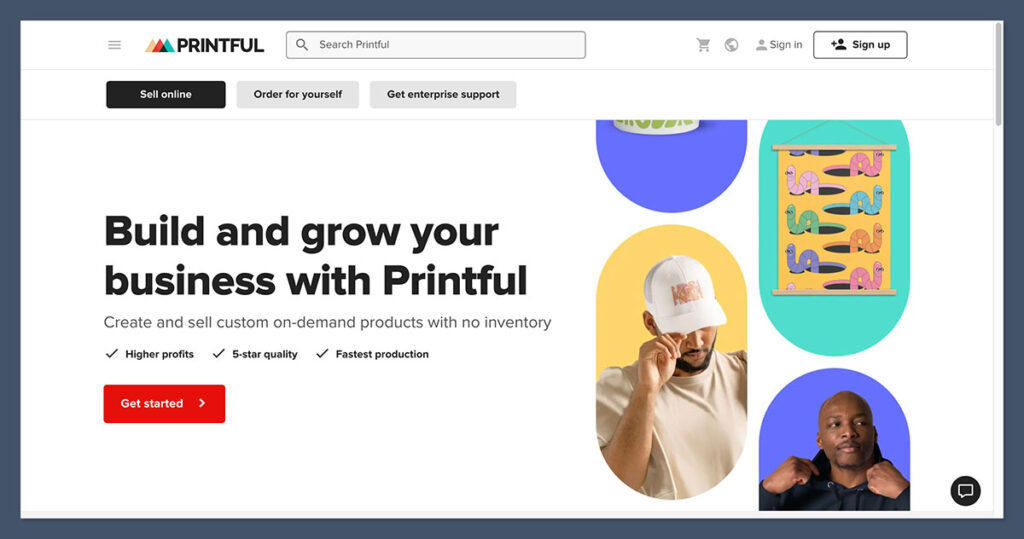
Printful is one of the most well-known print-on-demand platforms for a reason. It offers a clean interface, professional product mockups, and one of the most beginner-friendly onboarding processes. If you want to start selling quickly without worrying about third-party suppliers or complicated integrations, Printful is still one of the best all-rounders out there.
- No minimum orders
- Smooth integrations with Shopify, Etsy, WooCommerce, and more
- Large catalog with over 340 high-quality products
- In-house production in the US and EU
- White-label branding options
- Global shipping
- Optional warehousing service
| Feature | Range |
|---|---|
| Product Catalog | 340+ products |
| Monthly Platform Fee | $0 (Pay-per-order model) |
| Shipping | Global, rates vary |
| Fulfillment Centers | USA, Mexico, EU |
| Branding | Labels, pack-ins, custom packaging |
| Integrations | Shopify, Etsy, Amazon, Squarespace, etc. |
| Printful Free Plan | $0.00 per month |
Printful has been around since 2013, and over the past decade, it’s earned its place as the go-to POD platform for creators who want quality without having to manage their own logistics. It isn’t the cheapest or most customizable option, but its consistency, professional-grade branding tools, and polished platform are still hard to beat if you’re starting out or want to focus on design and marketing.
What We Like
One of the strongest points about Printful is that it manages fulfillment in-house for most of its products, especially in the US and EU. That means you’re not relying on a random supplier somewhere across the country or overseas — your order gets printed by Printful itself.
There’s also a real sense of brand control here. You can add custom packing slips, use your logo, and even include branded inserts. For sellers trying to establish a serious brand presence from day one, that’s a big deal. Everything looks polished, and the platform itself makes creating and publishing new products feel intuitive.
The interface is clean, the mockup generator is solid, and the integration with major platforms like Shopify and Etsy is seamless. Printful also lets you store your own inventory if you want to pre-print and ship from their warehouse — a feature most competitors don’t offer.
You’re not going to find the cheapest t-shirts here, but you will find a platform that lets you focus on product and design, not chasing down suppliers or worrying about shipping inconsistencies.
What Are Printful’s Pros and Cons?
Pros
- Consistent quality
Printful handles most of its fulfillment in-house, which reduces the variability you might see with marketplace models like Printify. - Professional branding features
You can add your own logo, packaging inserts, and pack-ins, which helps your brand feel more premium. - No subscription fees
Printful only charges when you sell a product. You can scale up or down without worrying about paying for unused access. - Polished user interface and setup
It’s easy to launch products, connect stores, and track fulfillment. A good fit for beginners and experienced sellers alike. - Built-in warehousing and logistics
If you want to stock popular items in advance, Printful will store and ship them for you.
Cons
- Higher base prices
Printful products typically cost more than other POD options like Printify or CustomCat. That affects your margins. - Fewer product choices
Compared to marketplace platforms, the product range is smaller. You’re limited to what Printful prints themselves or through select partners. - Limited supplier flexibility
You don’t get to choose between multiple providers for the same item. That removes the ability to price-shop or prioritize local fulfillment. - Global shipping is slower than Gelato’s localized model
While Printful does ship worldwide, delivery times can still lag compared to local fulfillment networks.
Who Is Printful For?
Printful is ideal for creators, entrepreneurs, and small businesses who value ease of use, consistent product quality, and brand presentation over the absolute lowest production cost.
It’s especially well-suited for:
- First-time POD sellers who want a platform that “just works”
- Brands focused on US or EU markets
- Creators who want to offer premium branding and custom packaging
- Etsy and Shopify store owners who care about presentation
- Businesses that want in-house fulfillment and warehousing without dealing with third-party print hubs
If you’re building a brand you want people to remember, and you’re okay with slightly lower margins in exchange for consistency and ease, Printful is still one of the top choices in 2026.
Printful Overall Review: 9.0 / 10
| Category | Score |
|---|---|
| Product Quality | 9.5 |
| Ease of Use | 9.3 |
| Branding Features | 9.2 |
| Catalog Variety | 8.0 |
| Pricing | 7.4 |
| Global Fulfillment | 8.5 |
| Integrations | 9.0 |
| Support | 9.1 |
2. Printify: The Best for Product Variety and Supplier Choice
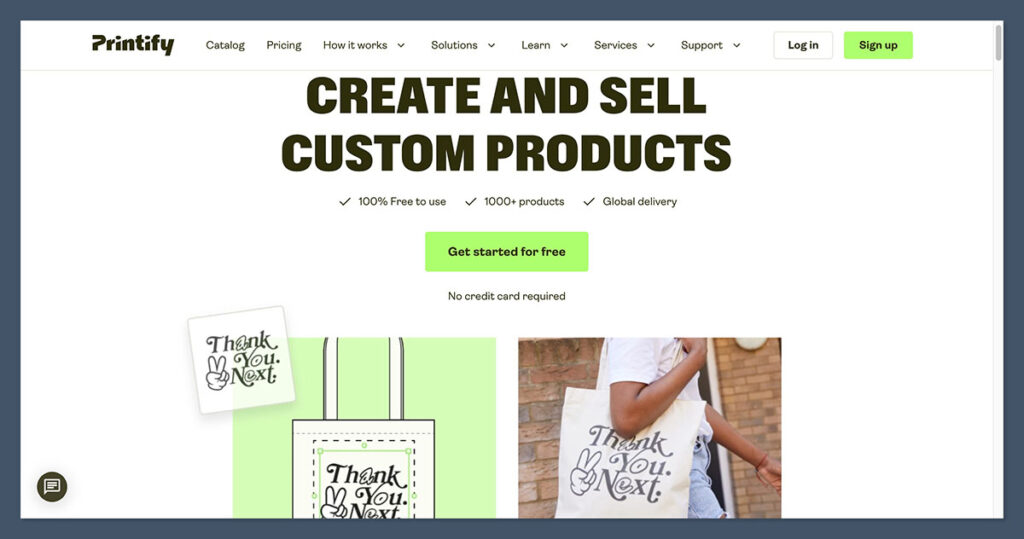
Printify gives you access to one of the largest catalogs in the POD space, with over 800 products and 90+ global print providers. If you want more control over product pricing, shipping location, or quality, this is the platform to go with. You can compare suppliers by cost, location, and even user reviews — giving you the flexibility to optimize based on margin or speed.
- 800+ products
- 90+ print partners worldwide
- Choose provider per product
- Premium plan unlocks wholesale pricing
- Multi-platform integrations (Shopify, Etsy, WooCommerce, and more)
| Feature | Range |
|---|---|
| Product Catalog | 800+ products |
| Monthly Platform Fee | Free, or Premium $24.99/mo (annual) |
| Shipping | Global, per provider |
| Fulfillment Centers | USA, EU, Asia |
| Branding | Varies by provider |
| Integrations | Shopify, Etsy, Wix, WooCommerce, etc. |
| Premium Plan | $24.99/mo (annual) or $39/mo (monthly) |
Printify is built for sellers who want to actively manage their production strategy. You can optimize for profit by choosing the lowest cost provider, or select a US-based print partner for faster domestic shipping. Once you’re ready, upgrading to Premium gives you access to better pricing, improving margins by up to 20% depending on your product mix.
What We Like
Printify’s biggest edge is flexibility. You’re not locked into one warehouse or printing partner. You can test shirts from one vendor, mugs from another, and compare delivery speed and quality firsthand. The dashboard lets you sort suppliers by cost, location, and ratings, so you can make smart decisions with every product.
The catalog is huge. You’ll find everything from apparel and homeware to car accessories and pet products. Unlike Printful, you’re not just getting the platform’s own product line — you’re tapping into a marketplace of vetted print partners.
Printify also integrates well with Shopify and Etsy, and setup is quick. If you’re scaling, their Enterprise plan includes support for automation and API access.
What Are Printify’s Pros and Cons?
Pros
- Unmatched product variety
More suppliers and more product types than most other platforms. - Supplier-level control
Pick providers based on quality, margin, or geography. - Premium plan = real savings
You can boost profits significantly if you sell at volume. - Global fulfillment flexibility
Choose faster or cheaper shipping routes depending on customer location.
Cons
- Inconsistent quality between providers
You’ll need to order samples and monitor changes. - Support and fulfillment varies
Since providers are third-party, your experience depends on who you pick. - More hands-on management
Not ideal for people who want to “set and forget” their POD store.
Who Is Printify For?
Printify is the best choice for sellers who want control. If you’re running a volume-based store or experimenting with new products constantly, Printify’s pricing model and catalog give you the flexibility to scale or pivot fast.
It’s ideal for:
- High-volume sellers who care about margins
- Store owners who want to test multiple providers
- International stores needing localized production
- Anyone tired of being locked into one fulfillment partner
Printify Overall Review: 9.2 / 10
| Category | Score |
|---|---|
| Product Variety | 10.0 |
| Supplier Control | 9.8 |
| Pricing Flexibility | 9.5 |
| Ease of Use | 8.5 |
| Branding Options | 7.8 |
| Shipping Coverage | 9.0 |
| Integrations | 9.2 |
| Support | 8.3 |
3. Gelato: The Best for Global Fulfillment Speed
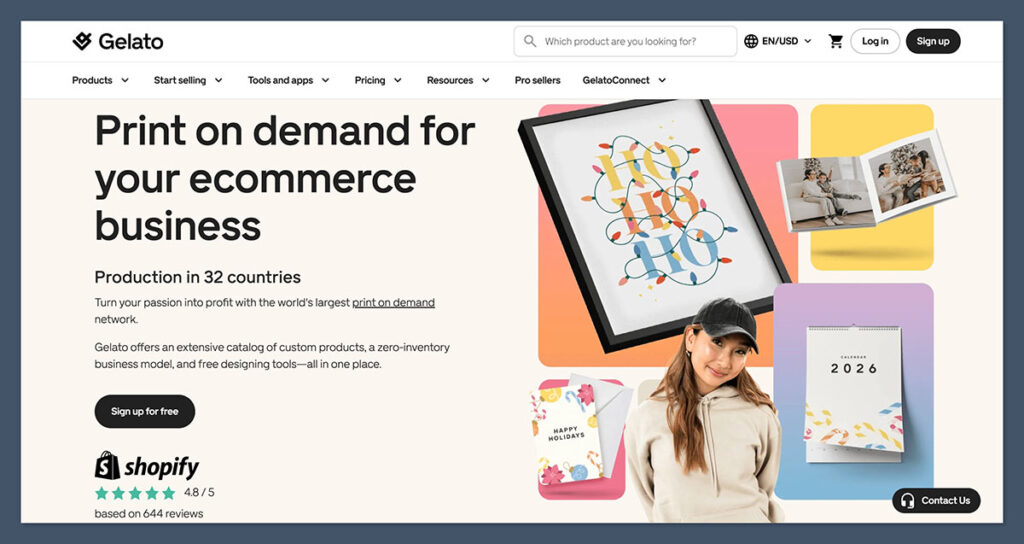
Gelato takes a global-first approach. Instead of shipping everything from one warehouse, Gelato fulfills your orders through a local production network in 34+ countries. That means faster shipping, lower costs, and fewer customs headaches for your customers — especially outside the US.
- 34+ local fulfillment hubs
- Personalization and design tools
- Seamless integrations
- Free plan, Gelato+ for $19.99/month
- Optimized for cross-border shipping
| Feature | Range |
|---|---|
| Product Catalog | Apparel, wall art, mugs, stationery |
| Monthly Fee | Free or $19.99/mo (Gelato+) |
| Shipping | Localized in 30+ countries |
| Fulfillment Centers | Europe, Asia, US, LATAM |
| Branding | Custom labeling, slips, limited packs |
| Integrations | Shopify, Etsy, WooCommerce, Wix, etc. |
| Premium Tools | Personalization editor, mockup tools |
What We Like
Gelato’s biggest selling point is delivery speed. Instead of shipping shirts from the US to Germany, your order might be printed in Berlin and delivered two days later. This makes a huge difference in cart abandonment and buyer satisfaction if you’re serving a global audience.
They’ve also invested in personalization tools and store integrations. With Gelato+, you get access to design support, mockups, and automated features that make managing a catalog easier.
The platform feels clean and professional, but it’s built for scale. Their network continues to expand, which means sellers outside the US finally get some POD love.
What Are Gelato’s Pros and Cons?
Pros
- Truly global production
Orders are fulfilled close to the customer, improving delivery speed and reducing costs. - Excellent for international scale
If you’re selling across multiple regions, Gelato reduces cross-border issues. - Helpful seller tools
Personalization, AI mockups, and ecommerce integrations included. - Simple pricing model
Start free, upgrade to Gelato+ if you need the extras.
Cons
- Product range varies by region
Not every product is available everywhere, so consistency may vary. - Not ideal for brand-heavy setups
Lacks advanced custom packaging or white-label depth. - Personalization tools are still evolving
Some sellers may find the customization interface limiting.
Who Is Gelato For?
Gelato is ideal for global-minded sellers who want to offer fast, localized shipping. If you’re selling in multiple countries, or want to reduce cart abandonment due to high international shipping fees, this platform shines.
Best for:
- International dropshippers
- Creators with global audiences
- Sellers tired of long overseas shipping times
- Multi-store operators managing different regional catalogs
Gelato Overall Review: 9.1 / 10
| Category | Score |
|---|---|
| Global Fulfillment | 10.0 |
| Catalog Consistency | 8.2 |
| Seller Tools | 9.1 |
| Ease of Use | 9.3 |
| Personalization | 8.7 |
| Integrations | 9.0 |
| Support | 8.8 |
4. Gooten: The Best for Operational Simplicity
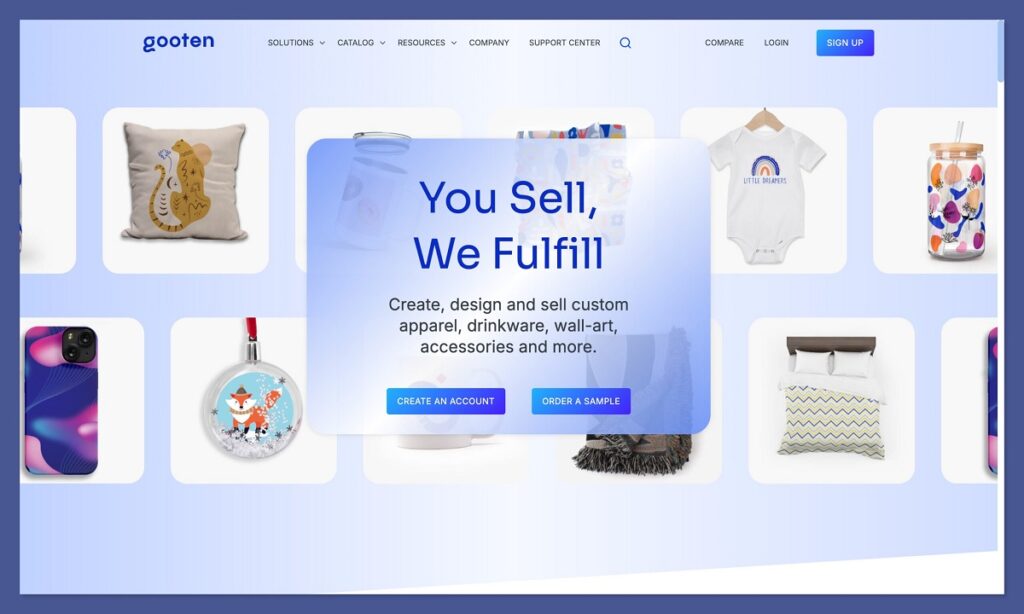
Gooten is one of the most straightforward POD platforms to work with. There are no subscription fees, no tiered plans, and no surprise charges. You only pay when an order is made, and fulfillment is handled behind the scenes without much manual input. If you want a “set it and forget it” approach, Gooten is the one I recommend.
- No platform or monthly fees
- Pay per order model
- Over 150 products
- Robust backend, ideal for operational efficiency
- Integrates with Shopify, Etsy, WooCommerce, and more
| Feature | Range |
|---|---|
| Product Catalog | 150+ SKUs |
| Platform Fee | None |
| Shipping | Global |
| Fulfillment Centers | Network of global partners |
| Branding | Custom branding depends on product |
| Integrations | Shopify, Etsy, API, WooCommerce |
| Subscription | None |
What We Like
Gooten is less about flashy design tools and more about streamlined operations. The backend system is built to handle orders at scale, especially for sellers who need consistency and automation. Everything from syncing your store to routing orders is handled in a clean, business-focused interface.
What makes it especially appealing for new sellers is the low barrier to entry. There’s no plan to subscribe to, and you don’t have to worry about breaking even on a monthly fee. If you don’t sell, you don’t pay — simple as that.
The platform uses a partner network for fulfillment, which helps maintain decent delivery coverage and redundancy, even if one provider experiences delays.
What Are Gooten’s Pros and Cons?
Pros
- No subscription fees
Ideal for low-risk testing or building a store slowly over time. - Consistent order management tools
The backend is professional and built for scale. - Low operational overhead
You can automate much of your fulfillment workflow. - Good international coverage
Global partners help with shipping coverage and fulfillment options.
Cons
- Limited control over suppliers
You can’t handpick who prints your orders like you can on Printify. - Product branding varies
Some products allow branding, others do not — it’s inconsistent. - Less design-focused
Gooten is not built for product mockups or visual content creation.
Who Is Gooten For?
Gooten is ideal for sellers who care about reliability and low operational hassle. It’s not a platform for creative freedom or boutique branding, but if you want to quietly run a profitable store in the background, Gooten checks the right boxes.
Great for:
- Entrepreneurs testing POD for the first time
- Sellers who don’t want monthly fees
- Brands that care more about efficiency than design flair
- Store owners who value automation and reliability
Gooten Overall Review: 8.7 / 10
| Category | Score |
|---|---|
| Ease of Use | 9.0 |
| Operational Control | 9.2 |
| Catalog Variety | 7.5 |
| Branding Options | 7.3 |
| Fulfillment Consistency | 9.0 |
| Support | 8.5 |
| Pricing Model | 10.0 |
5. SPOD: The Best for Speed and Simplicity
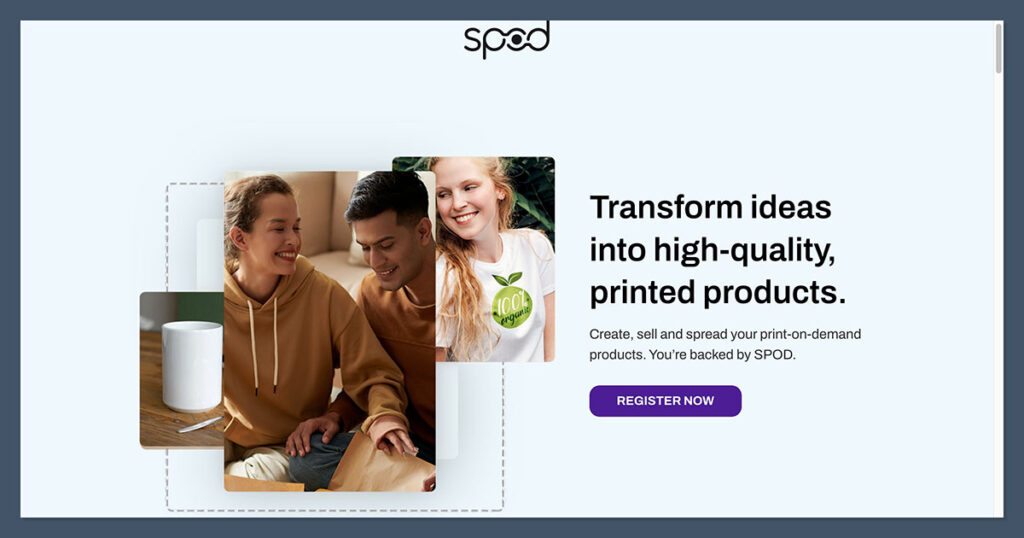
SPOD is one of the fastest POD services around. They claim to produce 95 percent of orders within 48 hours, and in my testing, they’ve hit that goal consistently. If you’re selling products where fast shipping is a selling point — like time-sensitive promotions or limited drops — SPOD might be your best move.
- 48-hour production average
- Apparel-focused catalog
- No monthly fees
- Fulfillment in US and EU
- Clean Shopify integration
| Feature | Range |
|---|---|
| Product Catalog | 200+ SKUs, mostly apparel |
| Platform Fee | None |
| Fulfillment Time | 48 hours (on 95% of orders) |
| Warehouses | US and Europe |
| Branding | Basic custom packing slips |
| Integrations | Shopify, WooCommerce, API |
| Subscription Required | No |
What We Like
SPOD is production-first. That means they’ve invested in their own manufacturing rather than outsourcing to a provider network. The result is faster and more reliable fulfillment — something Printful often promises but doesn’t always deliver on consistently.
Their Shopify integration is smooth, and the pricing is transparent. While their product catalog is narrower than Printify’s, it covers most of what general POD sellers need: t-shirts, hoodies, mugs, and accessories.
The biggest advantage is speed. If your store depends on fast delivery, SPOD is a major upgrade.
What Are SPOD’s Pros and Cons?
Pros
- Fastest production times
Fulfillment is handled in-house with a reliable 48-hour average. - Great for apparel
Ideal if you mostly sell standard clothing SKUs. - Low startup friction
No fees, no tiers, just pay per order. - Simple integration
Especially clean setup for Shopify users.
Cons
- Limited catalog
If you want unusual products, SPOD may feel restrictive. - Basic branding options
No custom labels or premium packaging. - Design tools are minimal
Product mockups and personalization are not SPOD’s strong suit.
Who Is SPOD For?
SPOD is great for sellers who value production speed and operational simplicity. It’s also one of the better options for POD beginners who want to launch quickly without getting overwhelmed.
Best for:
- Sellers with time-sensitive products
- Basic apparel stores
- Shopify store owners who want a reliable backend
- Low-risk product testers who value speed
SPOD Overall Review: 8.9 / 10
| Category | Score |
|---|---|
| Fulfillment Speed | 10.0 |
| Catalog Depth | 7.2 |
| Branding Features | 7.5 |
| Ease of Use | 9.1 |
| Cost Transparency | 9.5 |
| Support | 8.5 |
6. CustomCat: The Best for US-Based Apparel Margins
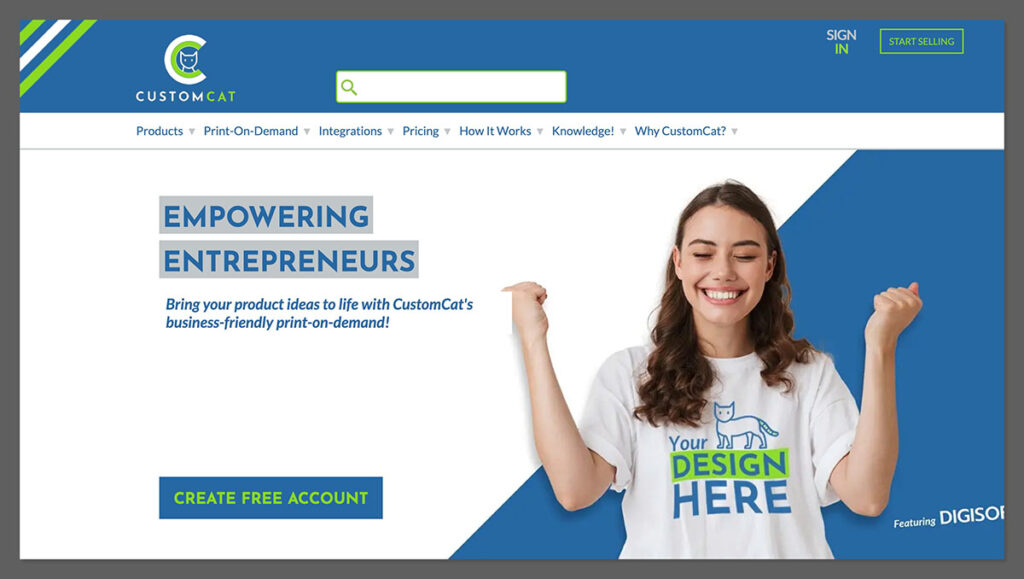
CustomCat is built for sellers who care about margin. With their Pro plan, you get access to aggressive discounts on apparel and accessories — especially US-produced basics like tees and sweatshirts. If you’re selling high volume or want to scale a domestic POD store, CustomCat is a top choice.
- US-based production
- Apparel-focused catalog
- Deep Pro plan discounts
- Shopify integration
- Embroidery and sublimation options
| Feature | Range |
|---|---|
| Product Catalog | 300+ SKUs, apparel heavy |
| Monthly Fee | Lite: Free, Pro: $30/mo ($25 annual) |
| Production | Based in the US |
| Branding | Custom packing slips, labeling |
| Integrations | Shopify, Etsy, WooCommerce, API |
| Discounts | Available with Pro |
What We Like
CustomCat’s Pro plan pricing is its biggest strength. You can get 20 to 30 percent lower base prices on bestsellers compared to Printful or SPOD. That gives you room to price competitively or protect your margin when offering discounts.
Unlike marketplaces, CustomCat fulfills everything in-house. That creates more consistent quality and fulfillment times. They also offer embroidery and dye-sublimation, which opens up higher-ticket apparel opportunities.
It’s not the most design-forward platform, but for apparel-first brands selling in the US, the economics make sense fast.
What Are CustomCat’s Pros and Cons?
Pros
- Best-in-class pricing for US apparel
Pro plan discounts are hard to beat at volume. - Good production consistency
Fulfills in-house with high reliability. - Easy Shopify integration
Fast setup and store sync. - Embroidery options
Adds product diversity and higher price potential.
Cons
- Smaller catalog
Limited non-apparel product range. - Pro plan costs extra
You’ll need to sell volume to make the subscription worth it. - Less flexibility for international shipping
Not optimized for global fulfillment like Gelato.
Who Is CustomCat For?
CustomCat is built for sellers who focus on US-based apparel sales and want to drive strong margins. It works best when you’re selling volume or want to run seasonal campaigns with low COGS.
Best for:
- Apparel-heavy stores
- Sellers focused on the US
- Brands scaling beyond $2,000/month
- Merch designers using embroidery or DTG
CustomCat Overall Review: 8.8 / 10
| Category | Score |
|---|---|
| Margin Potential | 9.5 |
| Fulfillment Control | 8.9 |
| Catalog Size | 7.8 |
| Ease of Use | 8.7 |
| Branding Options | 8.3 |
| Support | 8.5 |
7. Apliiq: The Best for Fashion-Focused Branding
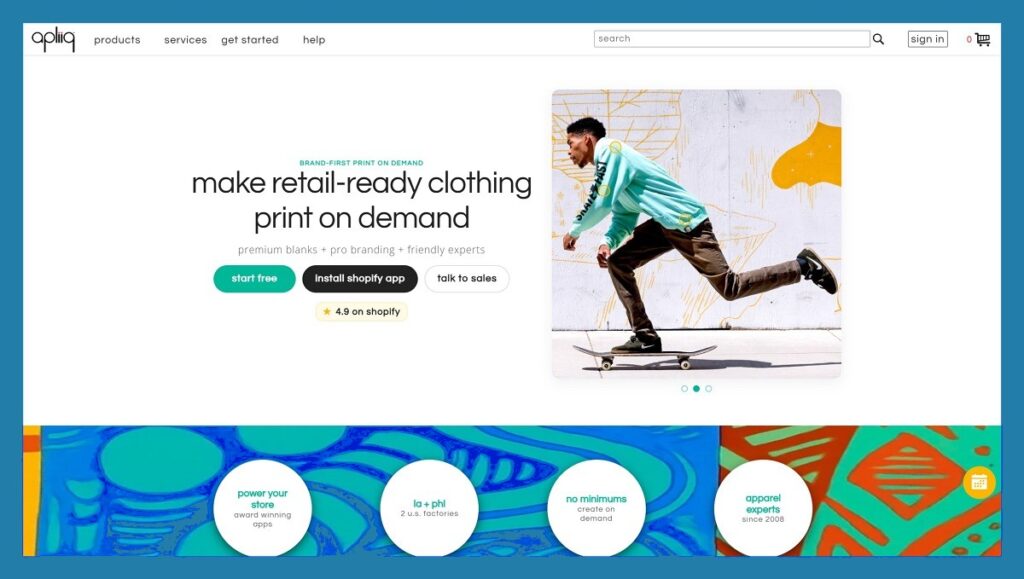
Apliiq is a standout for apparel sellers who want to move beyond basic t-shirts and offer premium, fashion-forward branding. From woven labels to embroidery and printed neck tags, Apliiq lets you build a true private-label brand without holding inventory.
- Woven labels, custom branding
- Focused on premium fashion and streetwear
- Pay per order, or VIP $39.99/month
- Based in Los Angeles
- Designed for fashion brands, not general POD
| Feature | Range |
|---|---|
| Product Catalog | Apparel only |
| Monthly Fee | Optional VIP $39.99/mo |
| Fulfillment | US-based, fashion-focused |
| Branding | Woven labels, private label kits |
| Integrations | Shopify, Etsy, WooCommerce |
| MOQ | None |
What We Like
Apliiq is different from most POD platforms because it doesn’t just print — it helps you build a fashion brand. You can add woven tags, branded neck labels, and even custom packaging options.
If you’re trying to sell at a premium price point, that presentation matters. Buyers notice the difference, and so do your margins.
You’ll need to be more involved in the process than with a platform like Gooten, but the payoff is a higher-quality product and a better brand perception.
What Are Apliiq’s Pros and Cons?
Pros
- Real fashion branding options
Woven labels, sewn tags, and more — your brand looks like a real clothing line. - No MOQ
You can order one at a time, even with premium touches. - Great for premium pricing
Products feel like boutique fashion, not POD merch. - VIP plan offers discount access
Useful if you’re scaling a fashion label.
Cons
- More expensive than other POD options
Branding depth comes at a cost. - Smaller catalog
Only apparel, no homeware, mugs, or accessories. - Slower fulfillment
Custom touches add time to production.
Who Is Apliiq For?
Apliiq is best for clothing brands, artists, and creators who want their apparel to feel like high-quality retail fashion. If you’re tired of selling generic tees and want something your audience will actually wear, this is your platform.
Ideal for:
- Streetwear and fashion brands
- Creators focused on premium apparel
- Shopify stores selling elevated merch
- Sellers building lifestyle brands
Apliiq Overall Review: 8.6 / 10
| Category | Score |
|---|---|
| Branding Control | 10.0 |
| Product Quality | 9.3 |
| Catalog Variety | 6.5 |
| Pricing Flexibility | 7.8 |
| Ease of Use | 8.0 |
| Fulfillment Speed | 7.2 |
8. teelaunch: The Best for Lightweight, Gift-Focused Stores

teelaunch is one of the easiest platforms to use if you’re selling giftable items and want a hands-off approach. With no subscription fees and a product catalog designed for simplicity, it’s a great entry point for Etsy sellers or Shopify stores that want to focus on evergreen gift products without managing dozens of SKUs or suppliers.
- No platform fees
- Curated product catalog
- Focused on gifts, accessories, and custom items
- Reliable Shopify and Etsy integrations
- Quick setup, no complexity
| Feature | Range |
|---|---|
| Product Catalog | ~100 SKUs, gifts and accessories |
| Monthly Fee | None |
| Fulfillment | US-based, in-house and partner |
| Branding | Limited, basic packing slips |
| Integrations | Shopify, Etsy |
| Subscription | Not required |
What We Like
teelaunch focuses on simplicity. The platform keeps things lean and efficient, making it a great choice for sellers who don’t want to get overwhelmed with supplier selection or margin management. The catalog is smaller than Printify or Printful, but what they do offer — mugs, tumblers, wall art, phone cases — are evergreen products that sell year-round.
It’s especially appealing for Etsy sellers because of the ease of integration and product relevance. You won’t find complex apparel options or deep branding control here, but for practical gifts and simple fulfillment, teelaunch is dependable.
What Are teelaunch’s Pros and Cons?
Pros
- No subscription fees
You only pay when orders come in. - Curated gift catalog
Great for seasonal items, personalized gifts, and evergreen products. - User-friendly
Setup and daily use are very beginner-friendly. - Quick Etsy and Shopify setup
Integrates easily and functions well without advanced customization.
Cons
- Limited product variety
Catalog is intentionally narrow, which may not suit niche or specialty stores. - Minimal branding support
No woven labels, custom packaging, or retail-level unboxing experience. - Fulfillment speed varies
Some items are fulfilled faster than others — depends on the product.
Who Is teelaunch For?
teelaunch is ideal for Etsy shop owners and beginner Shopify sellers who want to sell practical, giftable POD products without having to think too hard about suppliers, shipping logistics, or platform fees.
Best for:
- Gift shops and seasonal sellers
- Etsy creators selling mugs, art, and custom accessories
- Beginners testing POD with minimal setup
- Stores with low SKU count and predictable offerings
teelaunch Overall Review: 8.4 / 10
| Category | Score |
|---|---|
| Ease of Use | 9.2 |
| Catalog Depth | 6.8 |
| Integration Quality | 9.0 |
| Branding Options | 6.0 |
| Pricing Simplicity | 9.5 |
| Support | 8.3 |
9. Printed Mint: The Best for Boutique Packaging and Gift Presentation
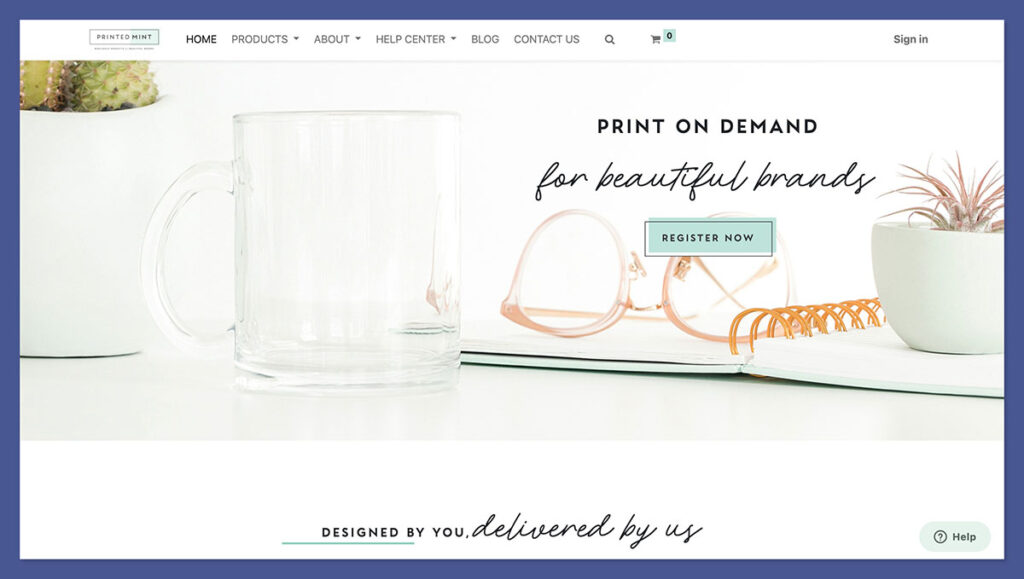
Printed Mint is a boutique POD service built for brands that care about presentation. Known for their packaging quality, curated product selection, and premium unboxing experience, Printed Mint is a favorite among influencers, gift brands, and Etsy sellers who want something that feels more like a retail gift shop than a generic merch store.
- Free to use, pay per order
- Premium packaging options
- Hand-packaged products
- Boutique product catalog
- Ideal for gift brands and influencer shops
| Feature | Range |
|---|---|
| Product Catalog | Gifts, home decor, apparel basics |
| Monthly Fee | None |
| Fulfillment | US-based, hand-packed |
| Branding | Custom packaging, labels, crinkle paper |
| Integrations | Shopify, Etsy |
| Subscription | Not required |
What We Like
Printed Mint’s biggest differentiator is the unboxing experience. You can offer crinkle paper, custom packing slips, and branded packaging inserts — giving every order a boutique feel. For customers buying gifts, this attention to detail adds perceived value and helps drive repeat orders.
The catalog focuses on curated, high-quality items like candles, accessories, wall decor, mugs, and throw pillows. You won’t find an overwhelming number of SKUs, but the items they do offer are beautifully presented and retail-ready.
The only tradeoff is that the production process is more manual, so turnaround times can be a bit longer than automated providers.
What Are Printed Mint’s Pros and Cons?
Pros
- Outstanding packaging presentation
Crinkle paper, custom slips, and curated wrapping add premium value. - Perfect for giftable products
Items feel elevated and personal, not like POD basics. - No subscription fees
Low barrier to entry for new shops. - Focused catalog of premium products
Great fit for niche gift shops and lifestyle brands.
Cons
- Longer fulfillment time
Hand packaging adds a few days to production. - Smaller product catalog
Fewer options compared to Printify or SPOD. - Not built for high automation or scale
Better for small to medium sellers focused on presentation.
Who Is Printed Mint For?
Printed Mint is ideal for creators, influencers, and small businesses that want to offer premium-feeling products with gift-ready packaging. It’s especially popular with Etsy shops that thrive on thoughtful, boutique-style experiences.
Best for:
- Gift brands and home decor stores
- Influencer shops with strong visual branding
- Etsy sellers focused on seasonal or custom gifts
- Brands that value packaging and presentation over scale
Printed Mint Overall Review: 8.5 / 10
| Category | Score |
|---|---|
| Presentation Quality | 10.0 |
| Catalog Variety | 7.0 |
| Ease of Use | 8.7 |
| Fulfillment Speed | 7.2 |
| Branding Options | 9.2 |
| Support | 8.5 |
How to Choose in 30 Seconds
If you’re still not sure which one is best, here’s a quick breakdown by need:
- Closest to Printful but cheaper: Printify
- Best for international orders: Gelato
- No monthly fees and simple: Gooten or SPOD
- Higher margins in the US: CustomCat
- Premium fashion branding: Apliiq
- Gifting and boutique vibes: Printed Mint
- Easy Etsy-compatible setup: teelaunch
The right alternative depends on what you sell and where your customers are. For example, if you’re doing global orders for stationery and mugs, Gelato might be the best fit.
If you’re launching a fashion brand in the US, Apliiq or CustomCat could make more sense.